
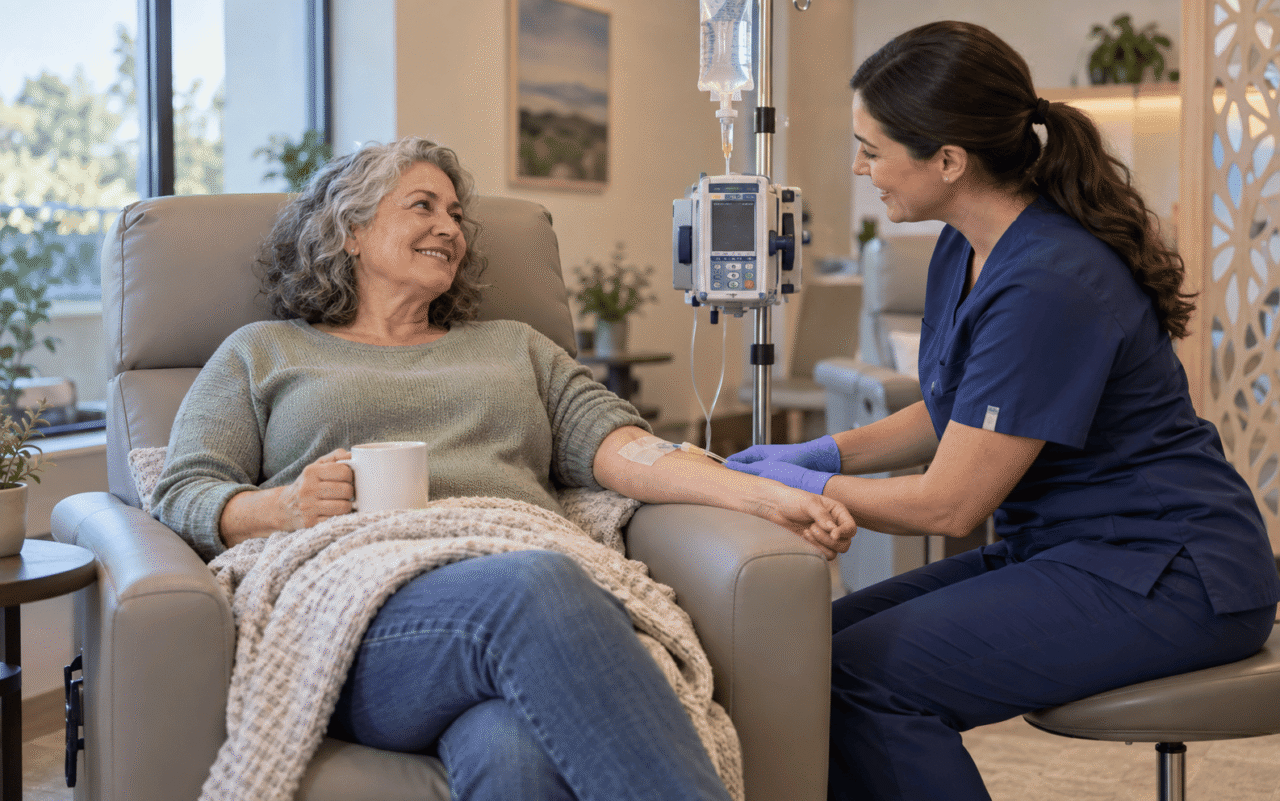
Guillain-Barré syndrome, commonly called GBS, is a rare neurologic disorder in which the immune system attacks peripheral nerves.
Unlike many chronic neurologic conditions, Guillain-Barré syndrome can progress quickly.
A patient may begin with tingling or weakness and experience worsening symptoms over hours or days.
For that reason, suspected Guillain-Barré syndrome requires prompt medical evaluation.
Treatment typically begins in a hospital where physicians can monitor muscle weakness, breathing, heart rate, blood pressure, and other functions.
Two treatments are commonly used to interrupt the immune-related nerve damage associated with GBS:
- Intravenous immunoglobulin, or IVIG
- Plasma exchange, also called plasmapheresis
The National Institute of Neurological Disorders and Stroke states that both treatments are considered equally effective when started within the first two weeks of symptoms. (NINDS)
What Is Guillain-Barré Syndrome?
Guillain-Barré syndrome occurs when the immune system mistakenly attacks part of the peripheral nervous system.
Peripheral nerves carry signals between the brain and spinal cord and the rest of the body.
When those nerves become damaged, patients may develop:
- Tingling
- Numbness
- Muscle weakness
- Difficulty walking
- Reduced reflexes
- Facial weakness
- Difficulty swallowing
- Difficulty breathing
Symptoms often begin in the legs and may progress upward.
The severity varies considerably.
Some patients experience relatively mild weakness.
Others can develop significant paralysis requiring intensive hospital care and breathing support.
Guillain-Barré Syndrome Is Usually an Acute Medical Condition
This distinction is important for patients researching infusion therapy.
GBS is generally not managed like a routine recurring home-infusion condition during its acute phase.
Because symptoms can progress rapidly and affect breathing and autonomic functions, patients are typically evaluated and monitored in a hospital.
Someone experiencing rapidly worsening weakness, difficulty walking, difficulty swallowing, or breathing problems should seek urgent medical evaluation.
IVIG for Guillain-Barré Syndrome
IVIG is one of the primary treatments for GBS.
Intravenous immunoglobulin contains antibodies derived from donated human plasma.
Although the exact mechanisms are complex, IVIG can help reduce the harmful immune activity attacking peripheral nerves.
NINDS explains that IVIG may lessen the immune attack on the nervous system and shorten recovery time. (NINDS)
IVIG is administered intravenously, usually as a treatment course over several days according to physician-directed dosing.
How Does IVIG Work in GBS?
GBS involves abnormal immune activity against the nerves.
IVIG contains a broad mixture of antibodies.
Researchers believe IVIG may interfere with harmful immune responses through several mechanisms, including reducing the effectiveness of antibodies contributing to nerve injury.
The treatment does not instantly repair already damaged nerves.
Instead, the goal is to interrupt or reduce the immune attack so the nervous system can begin recovering.
Plasma Exchange
Plasma exchange, also called plasmapheresis, is the other major immune treatment for Guillain-Barré syndrome.
During plasma exchange:
- Blood is removed through a catheter.
- Plasma is separated from blood cells.
- The plasma containing circulating antibodies and other substances is removed.
- Blood cells are returned with replacement fluid.
The goal is to remove circulating factors that may be contributing to nerve damage.
NINDS identifies plasma exchange and IVIG as the two commonly used acute treatments for GBS and describes them as similarly effective when initiated early. (NINDS)
IVIG vs. Plasma Exchange
Patients sometimes ask which treatment is better.
There is not one universal answer for every patient.
Both treatments are established options.
Factors that may influence the physician’s decision include:
- Medical condition
- Availability
- Venous access
- Treatment risks
- Other illnesses
- Clinical circumstances
An older American Academy of Neurology evidence-based guideline also concluded that IVIG and plasmapheresis have comparable efficacy in adults with GBS. (American Academy of Neurology)
The treating neurologist and hospital team determine which therapy is most appropriate.
Are IVIG and Plasma Exchange Used Together?
They are generally not routinely combined simply to increase effectiveness.
The AAN guideline concluded that IVIG combined with plasmapheresis should not routinely be used as combination treatment for GBS based on available evidence. (American Academy of Neurology)
Treatment decisions should always be made by the neurologist caring for the individual patient.
Why Hospital Monitoring Is Important
The nervous system controls much more than walking and movement.
GBS can affect nerves involved in:
- Breathing
- Swallowing
- Heart rate
- Blood pressure
- Bladder function
As weakness progresses, some patients may need intensive monitoring.
Hospital teams can assess:
- Respiratory function
- Muscle strength
- Blood pressure
- Heart rhythm
- Swallowing
- Mobility
This is why a newly developing case of GBS should not be approached like routine outpatient weakness.
Breathing Support
In severe GBS, weakness may affect the muscles used for breathing.
Some patients temporarily require mechanical ventilation.
Hospital monitoring allows the medical team to recognize declining respiratory function before it becomes a critical emergency.
This is one of the most important reasons acute GBS treatment typically occurs in a hospital.
Pain Management
GBS can also cause significant nerve pain.
Patients may experience:
- Burning pain
- Tingling
- Aching
- Sensitivity
The medical team may prescribe medications to help manage pain while the nervous system recovers.
Pain treatment is supportive rather than a replacement for IVIG or plasma exchange when immune therapy is indicated.
Preventing Complications During Immobility
Patients with significant weakness may spend substantial time in bed.
Healthcare teams may need to address complications related to reduced mobility.
These can include risks associated with:
- Blood clots
- Pressure injuries
- Joint stiffness
- Loss of muscle conditioning
Physical positioning, mobility assistance, and other supportive measures may be part of treatment.
Physical Therapy and Rehabilitation
Stopping the immune attack is only the beginning of recovery.
Damaged peripheral nerves need time to heal.
Physical therapy may help patients gradually restore:
- Strength
- Balance
- Walking
- Range of motion
- Endurance
- Coordination
Some patients may also require occupational therapy to regain independence with everyday tasks.
Occupational Therapy
Occupational therapists may help patients relearn or adapt activities such as:
- Dressing
- Bathing
- Eating
- Writing
- Using the hands
- Returning to work
Adaptive equipment may sometimes be helpful during recovery.
Speech and Swallowing Therapy
If GBS affects muscles involved in swallowing or speaking, additional therapy may be necessary.
Speech-language pathologists can evaluate swallowing safety and help patients recover function.
How Long Does Recovery Take?
Recovery varies considerably.
Some patients improve relatively quickly.
Others may require months or longer.
Nerve regeneration is slower than many other biological processes.
Recovery can depend on:
- Severity of nerve damage
- Age
- Overall health
- Speed of treatment
- Complications
- Rehabilitation
Patients should not compare their recovery timeline directly with someone else’s.
Does IVIG Cure Guillain-Barré Syndrome?
IVIG does not instantly cure GBS.
Its role is to interrupt the immune process contributing to nerve damage.
Recovery still depends on the nervous system healing.
That is why rehabilitation and supportive care remain important even after IVIG treatment is completed.
Is Guillain-Barré Syndrome the Same as CIDP?
No.
The conditions can sometimes appear similar because both affect peripheral nerves and may involve immune-mediated damage.
However, their time courses differ significantly.
Guillain-Barré syndrome typically develops acutely.
Chronic Inflammatory Demyelinating Polyneuropathy, or CIDP, generally follows a more chronic or relapsing course.
CIDP patients may require recurring IVIG maintenance therapy.
GBS more commonly involves a defined acute treatment course.
Can Guillain-Barré IVIG Be Given at Home?
During the acute phase of Guillain-Barré syndrome, patients often require hospital evaluation and monitoring because symptoms can progress quickly and affect breathing or other vital functions.
Therefore, acute GBS should not generally be viewed as a routine home-infusion condition.
If a neurologist later prescribes outpatient infusion therapy for a specific clinical situation, the physician and infusion provider would need to determine the appropriate treatment setting.
Patients should never delay urgent hospital evaluation while trying to arrange home IVIG for rapidly progressing neurologic symptoms.
What Happens During IVIG Treatment?
IVIG treatment generally includes:
- IV access
- Physician-prescribed dose
- Controlled infusion rate
- Clinical monitoring
- Observation for reactions
Potential IVIG-related symptoms may include:
- Headache
- Chills
- Fatigue
- Nausea
- Dizziness
Serious reactions are uncommon but possible.
Treatment should occur in an environment appropriate for the patient’s current medical condition.
What Happens After Acute Treatment?
After the acute immune treatment is completed, recovery may continue for weeks or months.
Patients may transition from:
Hospital
to:
Inpatient rehabilitation
or:
Outpatient rehabilitation
or:
Home with therapy
depending on their level of function.
Follow-up with a neurologist remains important.
Emotional Recovery Is Important Too
A sudden loss of strength and independence can be frightening.
Patients may experience:
- Anxiety
- Frustration
- Depression
- Fear of recurrence
- Stress about recovery
Family support, counseling, rehabilitation teams, and patient-support organizations may help patients manage the emotional side of recovery.
Frequently Asked Questions About Guillain-Barré Treatment
What is the main treatment for Guillain-Barré syndrome?
IVIG and plasma exchange are the two primary immune treatments used for GBS. NINDS describes them as similarly effective when started within the first two weeks of symptoms. (NINDS)
Is IVIG effective for GBS?
Yes. IVIG is an established treatment for Guillain-Barré syndrome and can reduce the immune attack affecting peripheral nerves. (NINDS)
Which is better, IVIG or plasma exchange?
Both are established therapies with similar effectiveness when used appropriately. The physician determines which is most appropriate for the patient.
Is Guillain-Barré treated at home?
Acute GBS usually requires hospital evaluation and monitoring because symptoms can progress quickly and may affect breathing and other vital functions.
How long does IVIG treatment take?
The dosing course is determined by the treating physician and is commonly administered over several days.
Can GBS come back?
Recurrence is uncommon but possible. New or worsening neurologic symptoms should be evaluated by a physician.
Does everyone fully recover?
Many patients experience substantial recovery, but the degree and speed of recovery vary.
Is rehabilitation necessary?
Patients with significant weakness may benefit from physical, occupational, or other rehabilitation services.
Prompt Treatment and Monitoring Matter
Guillain-Barré syndrome is different from many chronic conditions treated with immunoglobulin therapy.
Because symptoms can progress rapidly, timely medical evaluation and appropriate monitoring are essential.
IVIG and plasma exchange are established treatments that can help interrupt the immune attack, while hospital support and rehabilitation help patients manage complications and recover function.
Call Mercy Infusion at 833-594-0124 for questions about physician-prescribed immunoglobulin therapy.
If you are experiencing rapidly progressive weakness, difficulty swallowing, or difficulty breathing, seek immediate medical evaluation rather than waiting for routine infusion services.
About the Author
April Cable is the Senior Director of Operations at Mercy Infusion, with more than 35 years of experience in specialty pharmacy billing, reimbursement, operations, and patient access. She works with patients, physicians, pharmacists, insurers, and clinical teams to coordinate specialty medication and infusion therapy.
This article is intended for general educational purposes and does not diagnose Guillain-Barré syndrome or provide individualized treatment advice. Guillain-Barré syndrome can be a medical emergency. Diagnosis and treatment must be directed by qualified medical professionals.


